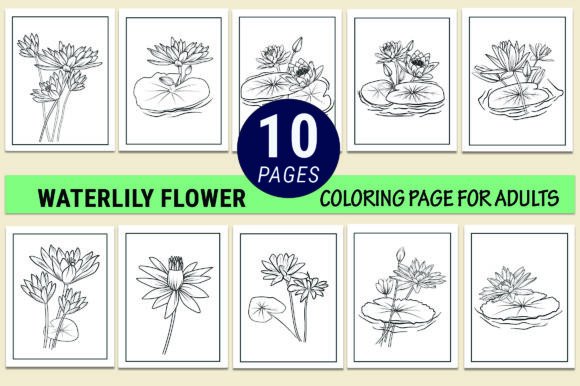
Waterlily Drawing Coloring Pages: A Versatile Vector Resource for Creative Professionals and Print-on-Demand Entrepreneurs
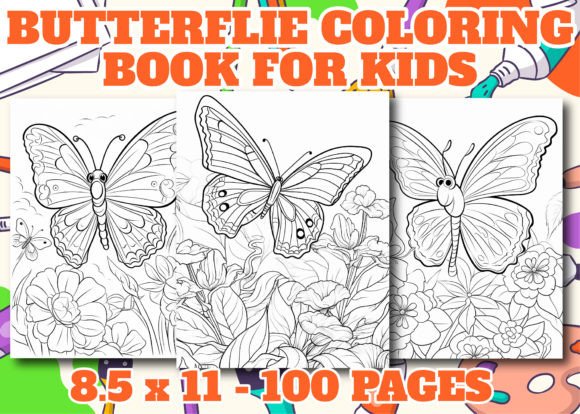
Waterlily Drawing Coloring Pages represent more than a simple collection of floral outlines—they are precision-crafted, production-ready vector assets designed for maximum adaptability across creative workflows. Built in Adobe Illustrator at standard 8.5×11 inches, each page delivers clean, scalable linework optimized for both artistic expression and commercial reuse. Unlike raster-based coloring sheets that degrade at larger sizes or during editing, these waterlily illustrations retain crisp edges at any scale—whether printed on a 4×6 greeting card or enlarged to cover an entire textile repeat pattern.
Why Vector Format Matters Across Disciplines
The foundational strength of this Waterlily Coloring Book KDP Interior lies in its native vector construction. Each design is authored as a fully editable Illustrator file (.ai), preserving layers, anchor points, stroke attributes, and grouping logic. This isn’t just convenient—it’s operationally essential for professionals who need to:
- Modify line weight to suit different printing methods (e.g., reducing stroke thickness for sublimation transfer clarity);
- Isolate individual petals or stems for animated SVG sequences or layered embroidery digitizing;
- Recolor non-destructively using global swatches—critical when preparing variants for seasonal collections or brand-aligned merchandise;
- Convert seamlessly to CNC-compatible paths via the included DXF files, enabling laser-cut stencils, wood inlays, or vinyl cutter templates.
For educators developing sensory integration tools, the vector fidelity ensures consistent line continuity—even when resized for large-format classroom posters. For researchers studying botanical illustration conventions, the precise geometry reflects accurate petal count, symmetry, and node placement found in *Nymphaea* species, making them suitable as pedagogical references beyond pure decoration.
Multi-Format Utility: From KDP Uploads to Physical Product Development
This digital printable Waterlily Coloring Book KDP Interior ships as a meticulously organized ZIP archive containing ten distinct file types—each serving a discrete function in real-world production pipelines:
- PDF (10 files): Optimized for direct Amazon KDP interior upload. Embedded fonts, CMYK-ready color profiles, and bleed-safe margins eliminate prepress delays. No conversion step required—just drag, drop, and publish.
- EPS (10 files): Legacy compatibility with older RIP software and wide-format printers. Retains vector integrity while supporting transparency and clipping masks for packaging mockups.
- SVG (10 files): Web-native scalability ideal for interactive coloring apps, Shopify product configurators, or embedded design previews. Supports CSS-driven stroke animation and responsive resizing without pixelation.
- PNG (10 files): High-resolution (300 DPI) transparent-background rasters—perfect for social media teasers, Canva templates, or Etsy listing visuals where vector support isn’t available.
- JPG (10 files): SRGB-compliant, web-optimized exports for email newsletters, blog features, or print catalogs requiring lightweight, universally viewable previews.
- DXF (10 files): Industry-standard format accepted by Cricut Design Space, Silhouette Studio, and industrial plasma cutters—enabling physical prototyping of waterlily-shaped coasters, wall decals, or acrylic jewelry.
Business owners launching print-on-demand stores benefit from this breadth: a single waterlily motif can become a mug wrap (using SVG for curved-surface distortion correction), a duvet cover repeat (via seamless tile export from AI), or a heat-transfer vinyl decal (using DXF for precise cutting paths)—all without licensing friction or quality loss.
Real-World Applications Beyond Coloring Books
While marketed as a coloring resource, the Waterlily Drawing Coloring Pages demonstrate exceptional cross-domain utility. Their clean, uncluttered linework and balanced negative space lend themselves to contexts far beyond leisure-time art therapy:
Textile & Surface Design: Designers use the AI files to build seamless repeats in Illustrator’s Pattern Maker tool. By adjusting spacing, rotation, and overlap, they generate organic waterlily motifs suitable for quilting cotton, silk scarves, or wallpaper. The vector origin ensures no moiré patterns or aliasing when scaled to 27-inch fabric widths.
Greeting Card & Stationery Production: Print shops integrate the EPS versions into automated imposition workflows. Because each file includes crop marks and registration bars, they slot directly into PDF/X-1a compliant press files—reducing manual setup time by up to 40% compared to hand-traced alternatives.
Educational Material Development: Homeschool co-ops and Montessori educators layer the SVG files over interactive whiteboards. Using touch-enabled annotation tools, students trace petal structures while discussing pollination biology—transforming passive coloring into active learning.
Sublimation Template Creation: Crafters import the PNG or JPG files into sublimation software like Sawgrass Virtuoso. The high-contrast black linework ensures sharp transfer onto polyester blends, ceramic mugs, or aluminum phone cases—even after multiple heat cycles.
Technical Considerations for Optimal Use
To leverage the full potential of these Waterlily Drawing Coloring Pages, users should understand key technical constraints and best practices:
- Color Mode Consistency: While PDFs ship in CMYK for KDP compliance, AI and EPS files default to RGB. Always convert to CMYK before final print output—especially for spot-color textiles or Pantone-matched stationery.
- Stroke vs. Fill Logic: All outlines are stroked paths—not filled shapes. This preserves editability but requires attention when exporting for platforms that auto-rasterize strokes (e.g., some POD t-shirt mockup generators). Expand appearance before saving as legacy formats if needed.
- Font Independence: No text elements are embedded. Every label or title must be added externally—ensuring full typographic control and avoiding font licensing complications in commercial derivatives.
- Scalability Thresholds: Though vectors scale infinitely, practical limits exist. Enlarging beyond 200% for embroidery digitizing may require manual node simplification to prevent stitch density errors. Conversely, shrinking below 25% risks losing fine vein details in botanical accuracy.
Hobbyists often overlook how the inclusion of DXF and SVG formats bridges digital creativity with physical fabrication. A maker can sketch a waterlily-shaped bookshelf bracket in Fusion 360, then overlay the DXF path for exact contour matching—demonstrating how these pages serve as interoperable design primitives rather than static images.
User-Centric Adaptation Pathways
Different audiences engage with the Waterlily Drawing Coloring Pages through distinct adaptation pathways:
For KDP Authors: The PDF set enables rapid compilation into themed interiors—“Botanical Calming Pages,” “Zen Garden Line Art,” or “Aquatic Life Therapy Sheets.” Because all pages share identical trim size and bleed, pagination remains consistent across volumes, simplifying series development.
For Graphic Design Freelancers: The layered AI files allow selective deletion of background elements (e.g., removing lily pads to isolate floating blossoms), enabling custom compositions for client branding—such as a luxury spa’s monogram incorporating stylized waterlily stems.
For Art Therapists: The absence of shading or texture supports cognitive accessibility. Clients with visual processing differences respond better to unambiguous contours; therapists report higher engagement rates when using these pages versus grayscale tonal drawings.
For Small-Batch Manufacturers: The ZIP structure permits batch processing—running all 10 SVGs through Inkscape’s command-line interface to auto-generate mirrored versions for left/right shoe prints or symmetrical pillow inserts.
In every case, the underlying vector foundation ensures fidelity remains uncompromised, whether the end use is therapeutic, educational, decorative, or transactional. That consistency—across format, scale, and application—is what transforms a set of coloring pages into a strategic creative asset.
Long-Term Value Through Editability and Extensibility
Unlike fixed-image downloads, these Waterlily Drawing Coloring Pages grow in value over time. As design software evolves, the AI source files remain forward-compatible—new Illustrator features like generative fill or neural filters can reinterpret the base linework without re-drawing. Similarly, SVG enhancements such as CSS variables allow dynamic color theming across website sections, turning one waterlily into a living design system.
For educators building curriculum libraries, the ability to annotate, layer, and export subsets means a single purchase supports years of evolving lesson plans—from elementary plant anatomy units to advanced vector illustration courses. For entrepreneurs, the multi-format bundle reduces vendor dependency: no need to commission separate files for embroidery, sublimation, and web use.
Ultimately, the Waterlily Drawing Coloring Pages succeed not because they depict a specific flower, but because they embody a methodology—precision, flexibility, and intentional interoperability—that aligns with how modern creators actually work.