100 Editable KDP Interiors Templates 2026: Your Practical Workflow Accelerator for Publishing
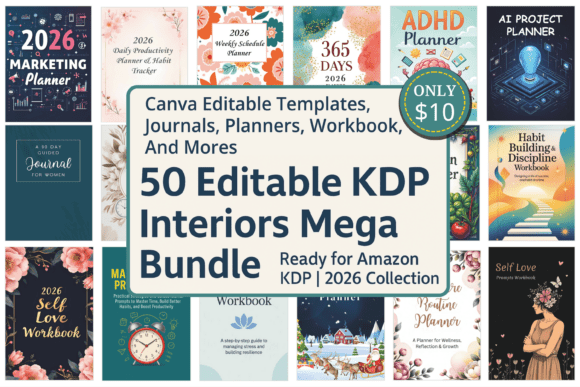
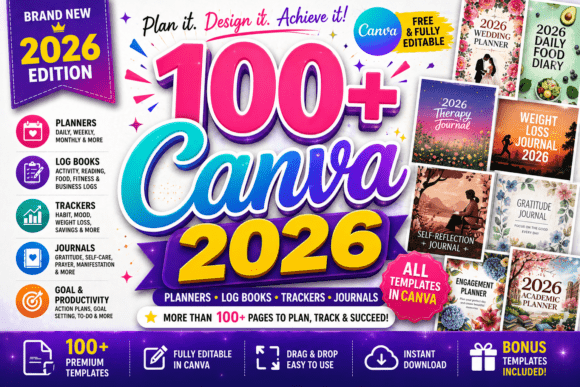
Creating high-quality, market-ready KDP interiors doesn’t require starting from scratch—or mastering InDesign. The 100 Editable KDP Interiors Templates 2026 is a purpose-built resource designed to integrate directly into how self-publishers, educators, coaches, and small business owners actually work. It’s not a one-off design pack—it’s a workflow multiplier. Whether you’re launching your first journal or scaling a catalog of 50+ planners, these templates reduce friction at every stage: ideation, production, quality control, and iteration.
How These Templates Fit Into Real Publishing Workflows
Most creators don’t build books in isolation. They juggle client deadlines, seasonal demand (like back-to-school or New Year planning), platform updates, and audience feedback. The 100 Editable KDP Interiors Templates 2026 supports that reality by functioning as a modular foundation—not a rigid template. You use them before a project to validate demand (e.g., testing a 2026 ADHD Planner for Adults Women against keyword volume and competitor gaps), during production to maintain consistency across fonts, margins, and bleed settings, and after launch to rapidly refresh interiors based on customer reviews (“Add more habit tracker pages” → swap in the updated Daily Productivity Planner interior).
For example, a freelance content strategist building a social media coaching program might start with the 2026 Social Media Content Planner, then layer in custom brand colors and add client-specific prompts—without adjusting gutter width or rechecking KDP’s 0.125” margin requirement. That’s not convenience; it’s risk reduction. Every pre-validated interior eliminates a potential rejection reason, saving hours per title.
Compatibility and Integration: Where This Bundle Adds Leverage
These templates are built for Canva—no desktop software required—but they’re engineered for output, not just editing. All 100 interiors meet KDP’s latest print specifications: CMYK color mode, 300 DPI resolution, proper bleed (0.125”), and safe zones. That means no last-minute conversion headaches when exporting to PDF. More importantly, they integrate cleanly with other tools in your stack:
- KDP Dashboard: Use the consistent interior structure to batch-upload multiple titles using the same cover-to-interior ratio, reducing manual entry errors.
- Canva Brand Kits: Save your logo, primary palette, and typography once—then apply them globally across journals, workbooks, and planners with one click.
- Google Sheets or Airtable: Pull usage data (e.g., “Which planner types convert best in Q4?”) and feed insights back into template selection for next year’s lineup.
- Customer service workflows: When buyers request interior tweaks (e.g., larger line spacing for dyslexic readers), edit the source Canva file and re-export—no redesign needed.
This isn’t about replacing skill—it’s about compressing cycles. A teacher creating a 2026 Growth Mindset Workbook for Kids spends less time aligning bullet points and more time refining age-appropriate reflection prompts. That shift compounds across dozens of titles.
Preparation, Organization, and Long-Term Usability
What separates this bundle from generic Canva templates is its organizational logic. Files are grouped by function—not just theme. Journals, planners, and workbooks each have dedicated folders with standardized naming (e.g., “2026_Gratitude_Journal_Interior_v2_CMYK”). That structure matters when managing 30+ active KDP listings. You can quickly locate, duplicate, and version-control interiors without hunting through unlabeled canvases.
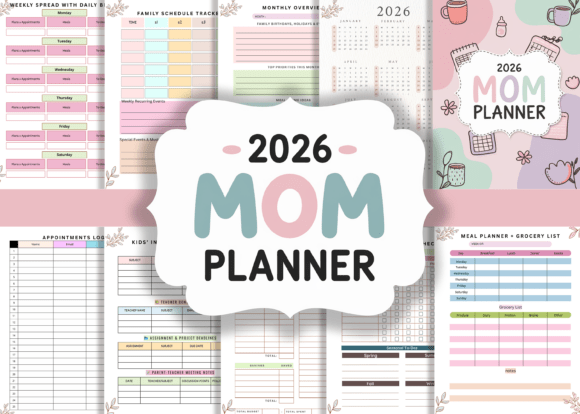
Preparation is baked in, too. Each template includes editable placeholder text with real-world examples—not lorem ipsum. The 2026 Business Budget Planner shows realistic line-item categories (software subscriptions, contractor fees, travel), while the 2026 Therapy Journal models clinically appropriate prompts (“What emotion showed up most this week? Where did you feel it in your body?”). That saves research time and grounds your content in actual user needs.
Long-term, the 2026 date stamp isn’t arbitrary—it signals intentional forward compatibility. These interiors anticipate KDP’s 2026 formatting guidelines (including any upcoming changes to trim sizes or paper options) and avoid deprecated elements like non-embedded fonts or RGB-only graphics. You’re not buying a snapshot; you’re investing in a maintainable asset.
Launching a Niche Series (e.g., Neurodivergent Planning Tools)
You identify rising search volume for “ADHD planner for women.” Instead of designing from zero, you open the 2026 ADHD Planner for Adults Women and the 2026 Brain Dump Idea Journal. You unify headers, adjust spacing for readability, and insert your signature section (“Energy Mapping Tracker”). Within two days, you’ve validated layout, exported print-ready PDFs, and uploaded both to KDP—freeing bandwidth to write compelling blurbs and target Pinterest keywords.
Scaling Seasonal Offerings
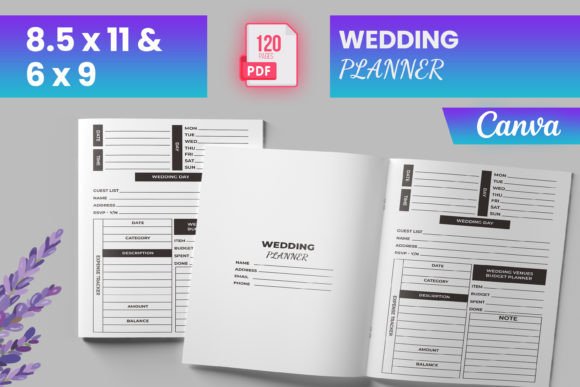
A wedding planner launches a 2026 Wedding Planner Journal in January, then uses the same interior framework—swapping colors, icons, and vendor checklist wording—to create a 2026 Birthday Party Planner by May. The structural consistency builds brand recognition; the rapid reuse keeps inventory fresh without sacrificing quality.
Updating Based on Customer Feedback
Reviews for your 2026 Anxiety Journal mention “too many blank pages between prompts.” You open the source file, duplicate the prompt page, and insert an additional reflection worksheet—keeping all margins, font sizes, and page numbers intact. Re-export, upload, and update your KDP listing—all in under 20 minutes.
Quality Control Without the Overhead
Every interior in the 100 Editable KDP Interiors Templates 2026 has been stress-tested against KDP’s automated pre-flight checks. That means no surprise warnings about “low-resolution images” or “incorrect color profile.” But quality goes beyond technical compliance. These templates embed usability discipline: consistent heading hierarchy, sufficient contrast for readability, logical page-turn flow (left/right alignment optimized for double-page spreads), and intentional white space—not filler. When your interior feels intuitive, readers stay longer, review more positively, and recommend more freely.
That consistency also streamlines your own QA process. Instead of checking 100 unique layouts, you verify one master structure—then spot-check variations. It turns quality assurance from a bottleneck into a checkpoint.
Moving Beyond “Just Templates”
The value of the 100 Editable KDP Interiors Templates 2026 isn’t in the number—it’s in the intentionality behind each file. They reflect observed pain points: planners with insufficient weekly review space, journals missing dated headers, workbooks lacking answer keys or progress trackers. They’re built by people who’ve published, marketed, and supported KDP books—not just designed them.
If your goal is to ship better books, faster—not just more books—this bundle functions as infrastructure. It handles the predictable so you can focus on the irreplaceable: your voice, your audience insight, and the specific value only you deliver. That’s not a shortcut. It’s leverage, applied precisely where it matters most.