Bugs Coloring Pages: A Strategic Creative Asset for Modern Creators and Educators
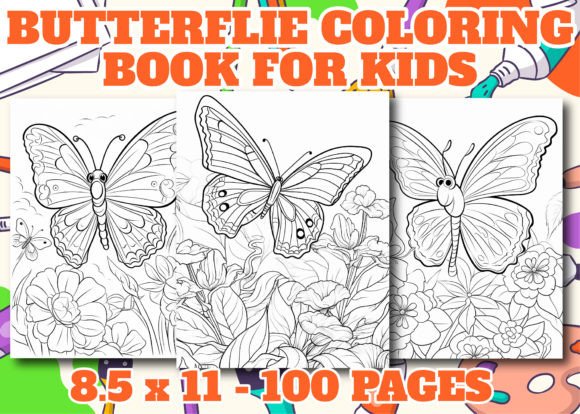
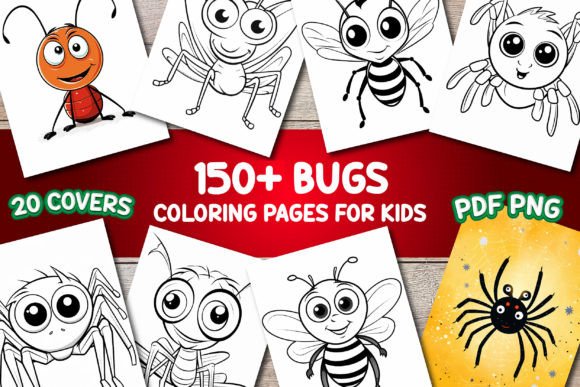
At first glance, Bugs Coloring Pages may appear as a simple collection of black-and-white insect illustrations—but beneath its playful surface lies a versatile, high-fidelity digital resource engineered for impact across education, publishing, wellness, and entrepreneurial workflows. Designed with precision—300 DPI resolution, A4/8.5×11″ dimensions, 100 meticulously crafted PNG line-art files, and a professionally adaptable cover suite—this asset transcends traditional coloring books. It’s a modular, scalable creative tool built for professionals who value intentionality in design, accessibility in delivery, and adaptability in application.
More Than Just Lines: The Evolving Role of Thematic Coloring Content
The global coloring market has matured far beyond childhood pastime. According to recent industry analyses, the therapeutic coloring segment alone is projected to exceed $1.7 billion by 2027—driven not by nostalgia, but by evidence-informed demand for accessible mindfulness tools. What sets Bugs Coloring Pages apart is its deliberate alignment with two converging trends: biophilic engagement and structured creative scaffolding.
Biophilia—the innate human affinity for life and lifelike processes—explains why insect-themed content resonates so powerfully across age groups. Butterflies, ladybugs, and dragonflies aren’t just visually engaging; they’re gateways to curiosity about ecosystems, metamorphosis, pollination, and biodiversity. Educators integrate such imagery into STEAM-aligned lesson extensions. Therapists use entomological motifs to ground sensory regulation exercises. And parents seek them out because children return to bug-themed pages repeatedly—not as distraction, but as ritualized focus.
Meanwhile, “structured creative scaffolding” refers to how well-designed line art supports cognitive flow: consistent line weight, balanced negative space, and intentional detail gradients (e.g., subtle wing veining on a moth versus bold segmentation on a centipede) invite sustained attention without overwhelming. Each of the 100 illustrations in Bugs Coloring Pages reflects this principle—making it equally viable for a kindergarten classroom printing single sheets, a KDP publisher assembling a premium 60-page volume, or a wellness brand licensing vector-ready assets for guided meditation workbooks.
Why Professionals Are Prioritizing Precision-First Coloring Assets
Creators today operate under tighter constraints: shorter production cycles, higher audience expectations for visual polish, and increasing pressure to deliver multi-platform utility from a single source file. Generic clipart bundles or low-res downloads no longer meet professional standards—especially when launching on Amazon KDP, where algorithmic visibility favors interior consistency, print-ready formatting, and customer retention signals like low return rates and high review scores.
Bugs Coloring Pages answers these demands through technical rigor. Its 300 DPI PNG files retain crispness whether scaled for an A4 printable, resized for a tablet-based coloring app, or converted to SVG for web interactivity. The inclusion of 20 high-resolution cover PNGs—each at 300 DPI and fully resizable—eliminates common bottlenecks in KDP setup: no more pixelated thumbnails, no last-minute font kerning crises, no compromises on branding cohesion. For freelancers building client portfolios or agencies developing branded educational kits, this means faster turnaround, fewer revision rounds, and stronger perceived value.
Consider a real-world workflow: A curriculum designer uses three Bugs Coloring Pages illustrations—one butterfly, one ant colony, one leaf-cutter scene—to anchor a unit on interdependence in ecosystems. She overlays simplified annotation layers in Canva, adds QR codes linking to short habitat videos, and exports the final PDF for classroom tablets and printed handouts. Because the base assets are clean, scalable, and stylistically unified, the entire package feels intentional—not pieced together.
From Print to Platform: The Expanding Utility of Insect-Themed Line Art
The versatility of Bugs Coloring Pages becomes even more apparent when viewed through the lens of platform convergence. As digital literacy rises among younger audiences, educators and developers increasingly blend physical and digital modalities. A single ladybug illustration, for example, can serve simultaneously as:
- A printed coloring sheet in a nature journal;
- A layered PSD file for students to add color digitally using Procreate or Adobe Fresco;
- A background element in an interactive e-learning module about symmetry and bilateral patterns;
- A tactile stencil for clay or fabric dye projects;
- A reference image for early coding exercises (e.g., “draw a path for the caterpillar using directional commands”).
This cross-modal flexibility is no accident—it reflects a broader shift in creative resource development: away from static, single-use assets and toward interoperable, context-agnostic building blocks. In that framework, Bugs Coloring Pages isn’t a product category; it’s infrastructure. Its “intricate designs” aren’t merely decorative—they’re pedagogical anchors. Its “relaxing coloring pages” aren’t just stress-relief tools—they’re entry points into deeper observational practice, supporting executive function development in children and attentional restoration in adults.
Design Ethics Meets Practical Intelligence
What further distinguishes Bugs Coloring Pages is its implicit adherence to inclusive design principles. The collection avoids anthropomorphism that flattens biological accuracy (no smiling spiders or cartoonish stingers), instead honoring real-world morphology while retaining approachability. This balance supports science communication goals without sacrificing accessibility—a nuance often overlooked in mass-market coloring content. For creators targeting international or multilingual audiences, this fidelity also enables seamless translation of accompanying educational text: a labeled diagram of a beetle’s exoskeleton remains accurate whether captioned in English, Spanish, or Japanese.
Moreover, the absence of grayscale shading or pre-filled textures ensures maximum adaptability across assistive technologies. Screen readers interpret clean vector-like line art more reliably than complex raster fills. High-contrast black-on-white rendering meets WCAG 2.1 AA standards for visual clarity—critical for neurodiverse learners and aging users alike.
Strategic Integration: How to Leverage Bugs Coloring Pages Beyond the Obvious
Entrepreneurs and marketers are already deploying Bugs Coloring Pages in unexpected ways. One eco-conscious stationery brand licenses select illustrations to create limited-edition washi tapes—pairing each pattern with fun facts about the featured insect (“Did you know? Fireflies light up through bioluminescence—not heat!”). A children’s podcast producer uses the caterpillar and chrysalis pages as visual companions to episodes on growth mindset, mailing them as bonus downloads to Patreon supporters. And a corporate L&D team repurposes the detailed beetle anatomy page into a metaphor-rich workshop handout on “systems thinking”—using segmentation, joint articulation, and compound eyes as analogies for organizational structure and perspective-taking.
These examples illustrate a core insight: Bugs Coloring Pages succeeds not because it’s “cute,” but because it’s context-rich. Every line carries latent meaning—biological, symbolic, aesthetic—that professionals can activate based on their audience’s needs. That depth transforms what could be a disposable download into a durable, reusable, reputation-building asset.
In a landscape saturated with generic digital products, specificity wins. Precision wins. Purpose-built utility wins. Bugs Coloring Pages embodies all three—not as marketing claims, but as measurable features embedded in every pixel, every page dimension, every thoughtful design decision. For creators committed to substance over surface, it’s not just another coloring book. It’s a quietly powerful lever for engagement, education, and expressive clarity—ready to scale with your vision.