Free Savings Tracker Logbook Canva
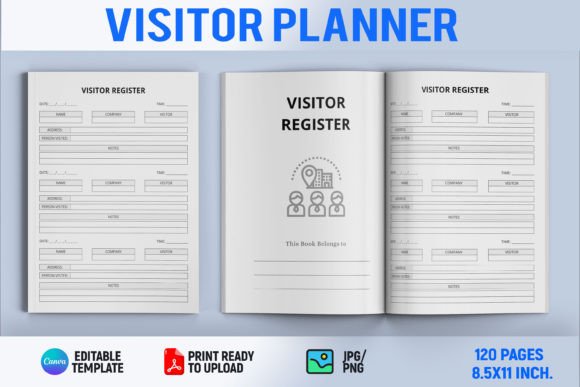
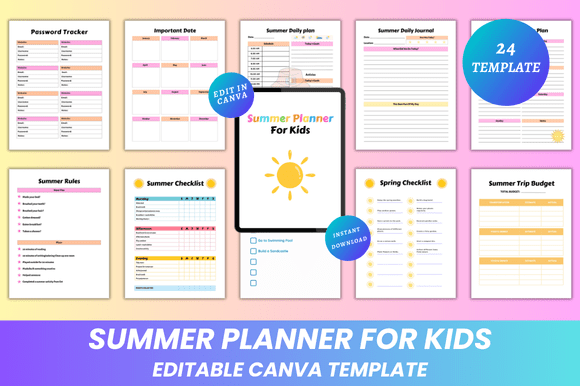
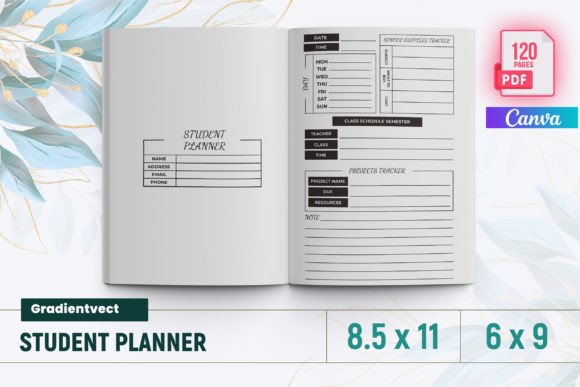
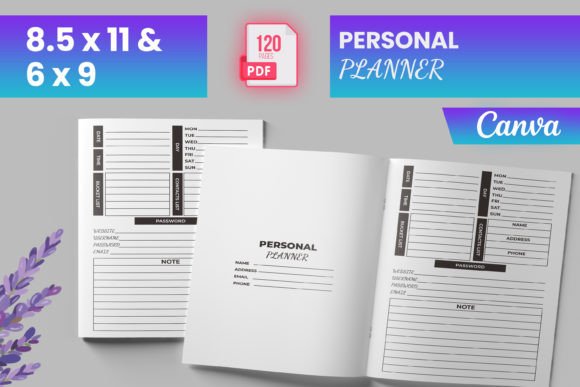
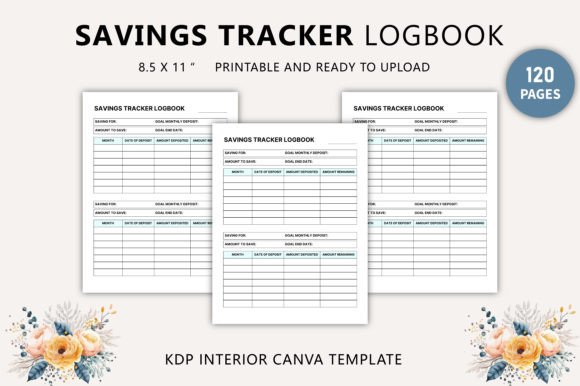
A Free Savings Tracker Logbook Canva refers to a downloadable, customizable savings planning resource designed for personal finance tracking. It is not software or an app, but a printable and editable digital product—typically delivered as a print-ready PDF and an editable Canva link. The logbook is structured as a 120-page, 8.5 × 11 inch document formatted at 300 DPI in CMYK color mode with no bleed, optimized for professional printing. It includes high-resolution JPG and PNG assets alongside the main PDF, and every element is original—designed from scratch without stock templates or recycled layouts.
This type of logbook supports users who prefer tactile, paper-based budgeting or hybrid methods—writing by hand while retaining flexibility to adjust layout, fonts, colors, or content before printing. The Canva link allows real-time editing directly in the browser: users can add personal goals, rename sections, insert custom categories (e.g., “Emergency Fund” or “Vacation 2025”), or adapt date ranges without design expertise.
People often explore a Free Savings Tracker Logbook Canva when they seek structure without rigidity—something more intentional than a blank notebook but less automated than subscription-based apps. It appeals particularly to those who value visual clarity, physical engagement with financial goals, and full ownership of their data. Unlike cloud-based tools, there is no account creation, data collection, or recurring fee. Everything remains local unless the user chooses to print or share files.
One key benefit is control over format and function. Because the interior is provided as both an editable Canva file and a ready-to-print PDF, users decide how much customization they need. A teacher might rebrand pages for classroom use; a small business owner could adapt sections for cash flow monitoring; someone saving for a home may highlight mortgage down payment milestones. The 120-page count offers room for multi-year tracking, reflections, goal breakdowns, and progress summaries—all without pagination gaps or formatting surprises.
However, this flexibility comes with tradeoffs. Editing in Canva requires basic familiarity with its interface—dragging elements, adjusting text boxes, exporting correctly. Users expecting plug-and-play automation (e.g., auto-calculating totals or syncing across devices) will find this format limited. There are no built-in formulas, reminders, or cloud backups. Progress tracking depends entirely on consistent manual input and review. Similarly, while the PDF is print-ready, users must ensure their printer settings preserve CMYK fidelity and 300 DPI resolution—especially if producing physical copies for resale or gifting.
Another consideration is scope. This logbook is purpose-built for savings tracking—not comprehensive budgeting. It does not include expense categorization, income logging, debt payoff calculators, or tax-related worksheets. If your primary need is holistic money management, a broader tool—whether a spreadsheet, dedicated app, or all-in-one planner—may better serve long-term habits. Likewise, if you rely heavily on mobile access or voice notes, a static PDF + Canva combo lacks portability between devices without additional setup (e.g., saving edited pages as images for tablet annotation).
The Free Savings Tracker Logbook Canva is a strong fit when your workflow prioritizes intentionality over automation. It suits learners building foundational financial literacy, educators introducing budgeting concepts, journalers integrating finance into reflective practice, or creatives who enjoy designing their own systems. It also works well for short- to mid-term goals—like saving for a laptop, travel fund, or holiday gift budget—where visible, page-by-page progress reinforces motivation. Because it’s fully editable, it adapts to evolving needs: you’re not locked into one structure for years.
Conversely, alternatives may be preferable in several scenarios. If you manage shared finances with a partner or family, collaborative features like live editing, commenting, or version history—available in Google Sheets or Notion templates—are more practical than sharing a Canva link and coordinating edits. If accuracy and speed matter most (e.g., tracking daily micro-savings or irregular income streams), spreadsheet-based trackers with formulas reduce manual error and save time. And if accessibility is essential—such as screen reader compatibility or keyboard navigation—the static nature of PDFs and Canva’s web interface may present barriers not found in dedicated accessibility-optimized apps.
Practically speaking, evaluate whether your current challenges stem from lack of structure—or lack of consistency. A beautifully designed logbook won’t improve outcomes if unused. Ask yourself: Do I respond better to handwritten entries? Am I willing to spend 5–10 minutes weekly updating pages? Do I prefer seeing progress unfold across physical spreads rather than scrolling through digital dashboards? If yes, this format aligns well. If your main friction point is remembering to track at all, consider pairing the logbook with external cues—like a recurring calendar alert or placing the printed version beside your morning coffee station.
Also consider scalability. While 120 pages support extended use, very long-term goals (e.g., 10+ year retirement planning) may require supplemental tools for projections, interest modeling, or asset allocation. The logbook records what you save—not how it grows. For that reason, many users combine it with free calculators (e.g., compound interest tools) or periodic reviews using bank statements and investment summaries.
Finally, verify technical readiness before downloading. Ensure your device supports Canva’s editor (modern browsers only; limited mobile functionality), and confirm your PDF viewer handles CMYK correctly if reviewing color fidelity pre-print. While the files are optimized for KDP interior standards—including bleed-free margins and print-safe fonts—minor adjustments may still be needed depending on your printer or binding method.
In summary, the Free Savings Tracker Logbook Canva serves a specific niche: those seeking a customizable, printable, and visually coherent framework for intentional savings tracking—without subscriptions, algorithms, or data dependencies. Its strength lies in adaptability and autonomy, not automation. Whether it fits depends less on features and more on how you engage with financial goals: deliberately, tangibly, and at your own pace.